
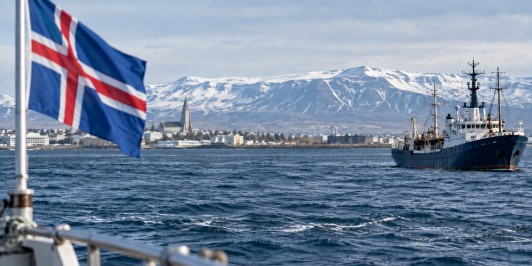
Iceland is set to propose legislation that would permanently ban commercial whaling, potentially leaving Japan and Norway as the last countries engaged in this practice. The Icelandic government is anticipated to present the bill to parliament in February, aiming to put an end to commercial whaling, which has long faced criticism and resistance from animal welfare and conservation organizations.
The proposed legislation comes after years of contentious debate over the ethics and environmental impact of whaling. Iceland’s whaling industry has predominantly focused on fin whales, a species classified as vulnerable. During the current hunting season, spanning from June to September, the industry has operated under a government-sanctioned quota, capturing dozens of these whales.
Animal welfare advocates have expressed strong support for the ban, emphasizing the ethical, environmental, and conservation issues tied to commercial whaling. Iceland’s decision to potentially cease whaling marks a significant shift from its 2006 decision to resume the practice, despite an international moratorium established in 1986 aimed at safeguarding whale populations.
In contrast, Norway restarted its commercial whaling activities in 1993, and Japan exited the International Whaling Commission in 2019, allowing it to resume commercial whaling within its territorial waters and exclusive economic zone. Should Iceland’s bill be enacted, it would leave Norway and Japan as the sole nations still engaging in commercial whaling.
It’s important to note that the international moratorium on commercial whaling does not extend to indigenous communities in specified areas, such as parts of Greenland and Alaska, where whale hunting is permitted for nutritional, cultural, and traditional reasons.