
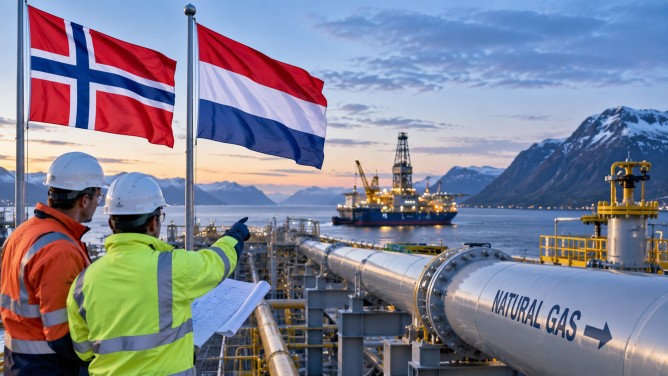
The proposed direct gas pipeline between Norway and the Netherlands is advancing towards realization following the successful completion of a feasibility study. This development is spearheaded by North Sea pipeline operator Nogat, which is now focusing on refining the project’s key aspects, including determining its transport capacity. The new pipeline is anticipated to enhance the security of gas supply by providing an alternative route for Norwegian gas, which will be crucial if existing pipeline links face disruptions.
Scheduled to commence operations in 2029, the pipeline is expected to have a capacity exceeding 4 billion cubic meters of gas annually. This volume could account for approximately 15% of the Netherlands’ total gas demand, offering a significant boost to their energy supply network. As domestic energy production declines, the new infrastructure is seen as essential in diversifying Europe’s energy sources and reducing dependency on suppliers from geopolitically unstable regions.
Nogat has indicated that integrating the new pipeline with its existing gas system should be relatively straightforward, as it can easily connect to the Norwegian offshore pipeline. According to Nogat Director Falco van Wissen, Norwegian gas is already integral, comprising nearly a third of Europe’s gas imports, and is considered less polluting compared to liquefied natural gas (LNG) imports. This makes the new pipeline not only a strategic move for energy security but also an environmentally favorable option.
The final investment decisions regarding the project are expected to be made by the parties involved by the middle of the next year. This timeline reflects the urgency and importance placed on enhancing Europe’s energy infrastructure, particularly in light of fluctuating global energy dynamics. The successful implementation of this project could set a precedent for future energy collaborations aimed at securing stable and sustainable energy supplies across Europe.