
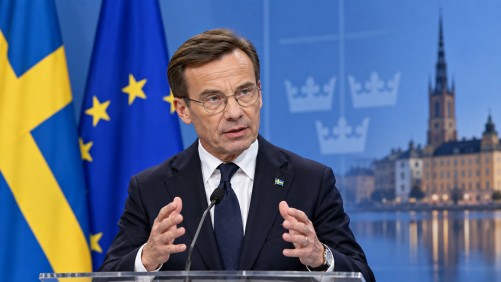
Swedish Prime Minister Ulf Kristersson has stepped down after a closely contested general election resulted in a slim majority for the centre-left opposition. The election outcome has set the stage for Social Democrats leader Magdalena Andersson to explore forming a new government.
Preliminary results indicate that the left-leaning opposition secured 176 seats in the Swedish parliament, edging out the right-leaning bloc that backed Kristersson by just three seats. Andersson now faces the complex task of negotiating with various opposition parties to forge a stable coalition.
Highlighting voters’ desire for a change in direction, Andersson emphasized priorities such as climate policy, education, healthcare, elderly care, and immigration. She has initiated discussions with the Left, Centre, and Green parties regarding potential cooperation, although differing views on issues like taxation and climate policy could complicate these talks.
Kristersson, who had been in office since 2022, formally resigned and noted that the parliamentary speaker would begin the process of establishing a new government. His previous administration had the external support of the Sweden Democrats, who saw their influence diminish in the recent election, falling from the second-largest party to the third.
In Sweden’s parliamentary system, minority governments often operate through agreements with other parties. Andersson is expected to seek wide-ranging support to ensure a stable governance framework as she works to assemble a coalition capable of leading the country effectively.