
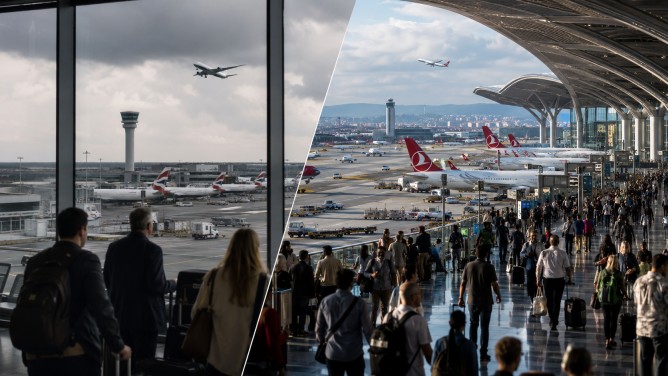
Istanbul Airport has overtaken Heathrow as Europe’s busiest airport, handling more passengers in July with a total of 8.15 million, compared to Heathrow’s 7.86 million. This shift marks a significant change in passenger traffic dynamics, with Heathrow experiencing a 1.5% decline from the same month last year while Istanbul Airport saw a 2.3% increase in traffic.
The decrease in passenger numbers at Heathrow is partly attributed to disruptions arising from conflicts in the Middle East. This development has intensified calls for the UK government to approve Heathrow’s proposed third runway. Currently, Heathrow’s two runways are operating near full capacity, and the proposed expansion, estimated to cost £33 billion, could potentially boost annual capacity to approximately 150 million passengers.
Heathrow officials argue that the latest statistics emphasize the urgent need for additional capacity to bolster the UK’s international connectivity, trade, and tourism. They stress that expanding the airport is crucial to maintaining its competitive edge amidst growing global travel demands.
On the other hand, Istanbul Airport, which commenced operations in 2018, benefits from a larger site and operates continuously throughout the day. With three runways already in service, the airport plans to introduce a fourth runway by the end of 2026, further increasing its capacity to accommodate more passengers.
Meanwhile, other UK airports such as London Stansted and Manchester have reported record numbers for July, with 3.1 million and 3.4 million passengers respectively. This indicates a robust demand for air travel within the UK, even as Heathrow faces challenges in retaining its top position in Europe.