
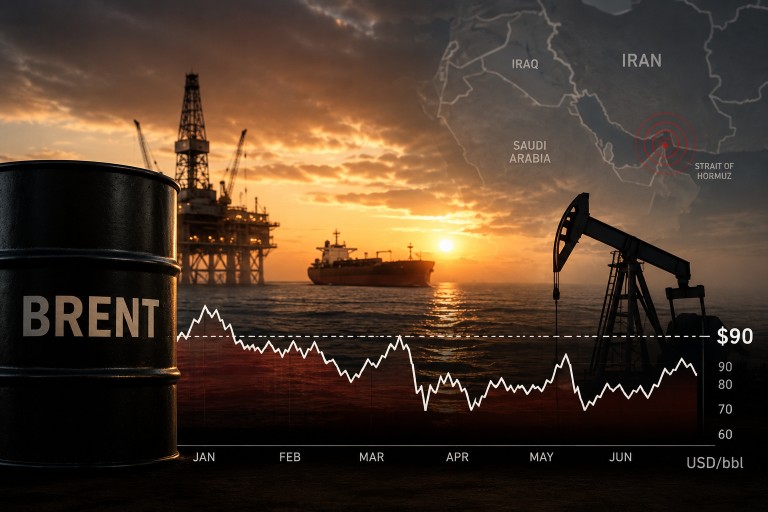
Brent crude oil prices are poised to stay below $90 per barrel unless there’s a significant and extended disruption in the Strait of Hormuz or clearer signs of dwindling global supplies. Despite recording its biggest weekly gain since April, Brent hovered around $85 on Friday, marking an 11% increase over the week, while West Texas Intermediate, the U.S. benchmark, neared $80. These price surges followed renewed military tensions between the United States and Iran, which disrupted Middle Eastern supply routes and reduced tanker traffic through the critical Strait of Hormuz, responsible for handling about 20% of global oil flows.
The market, however, remains cautious, with Brent struggling to surpass this week’s high of $87.55 per barrel despite an escalation in regional conflicts and significant slowing of tanker movements in Hormuz. Analysts suggest that the market’s belief in the possibility of diplomatic resolutions is tempering further price increases. As a result, traders are keenly observing whether global oil inventories decline sharply and if the Hormuz disruption extends.
Even amid increasing military exchanges, oil markets have maintained relative stability, with Brent crude trading within a narrow band. This stability indicates investor expectations that tensions might ease rather than escalate further. The Strait of Hormuz continues to be a focal concern for energy markets, with a noticeable slowdown in tanker traffic and exporters exploring alternative routes to mitigate reliance on this strategic passage.
The impact of these developments extends beyond crude oil. In the United States, refining margins have risen due to tightening diesel and gasoline supplies, and fuel markets in Europe are also starting to feel the pressure. The global energy supply is further strained by reduced fuel exports from Russia. Market participants are now concentrating on two potential outcomes: a significant fall in oil inventories that would indicate a supply shortage, or unsuccessful diplomatic efforts that could prolong disruptions in the Gulf region.
Unless one of these scenarios unfolds, analysts believe that Brent crude will likely remain below the $90-per-barrel threshold, even amid the heightened geopolitical risks currently facing the market.