
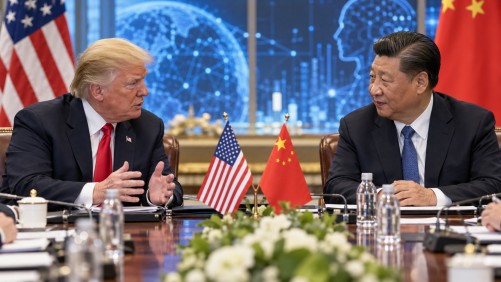
During a summit on September 25, U.S. President Donald Trump and Chinese President Xi Jinping focused on the ongoing conflict in the Middle East, as Iran put forth a seven-day plan aimed at reopening the strategic Strait of Hormuz and de-escalating regional hostilities. The discussions come amid heightened tensions affecting energy flows and security across the Gulf region, including Yemen and Lebanon.
President Xi urged both the United States and Iran to return to the June framework that had previously resulted in a temporary ceasefire and to resume broader negotiations for a settlement. Iran expressed its support for this proposal while simultaneously advocating for its own seven-day plan.
Iranian Foreign Minister Abbas Araqchi outlined the plan, which proposes reopening the Strait of Hormuz to normal maritime traffic within a week if the United States accepts the initiative. The plan also calls for an end to hostilities, the lifting of the U.S. blockade on Iranian ports, the release of frozen Iranian assets, and the removal of oil sanctions.
Although the United States has not publicly endorsed Iran’s proposal, it has acknowledged that discussions through mediators are ongoing and constructive, especially concerning nuclear issues. However, Iran has signaled it will not make concessions regarding its nuclear program, including uranium enrichment.
President Trump cautioned President Xi against providing any form of support to Iran, either directly or indirectly. U.S. Ambassador to China David Perdue confirmed that China had assured the United States it was not aiding Iran.
Meanwhile, the widening regional security concerns have prompted Saudi Arabia, Pakistan, and Turkey to explore closer military and intelligence collaboration. These discussions underscore the broader geopolitical implications of the conflict and the urgent need for a diplomatic solution.