
American economic policy, particularly its aggressive use of tariffs, has inadvertently become the chief architect of a new global rebellion. Nations that were once competitors or cautious partners, namely India, China, and Russia, are now finding common ground in their opposition to what they perceive as Washington’s economic coercion. This shared grievance is fueling a powerful movement to challenge the very foundations of the US-led world order.
This burgeoning alliance was on full display at the recent SCO summit, an event that commentator Van Jones labeled a “historically big deal.” The image of Modi, Xi, and Putin presenting a united front was a deliberate message to the world, and especially to the United States. Jones believes this is a clear and coordinated effort to replace the current unipolar system with a multipolar one, where power is more evenly distributed.
The discontent extends beyond mere trade disputes. It speaks to a broader frustration with America’s “my way or the highway” approach to international relations. By using its economic might as a weapon, the US has alienated key global players, pushing them into a cooperative bloc designed to counterbalance American influence and create alternative systems for trade and security.
The strategic consequences for the United States are severe. Jones warns that America has been strategically boxed in, facing a united front of powerful nations. The outcome is a world where the US is increasingly isolated, confronting a reality where “it’s everybody against us.” This marks a dangerous turning point for a nation that has long relied on its global leadership to secure its interests.
Dollars and Dissent: How US Tariffs Forged an Unlikely Anti-American Alliance
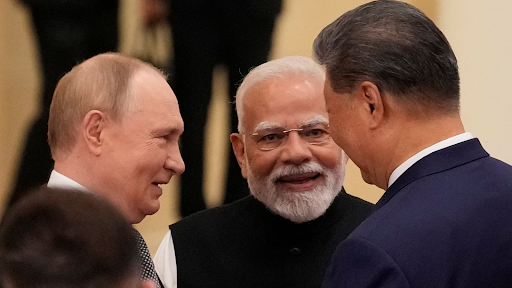
Picture Credit: www.heute.at
40