
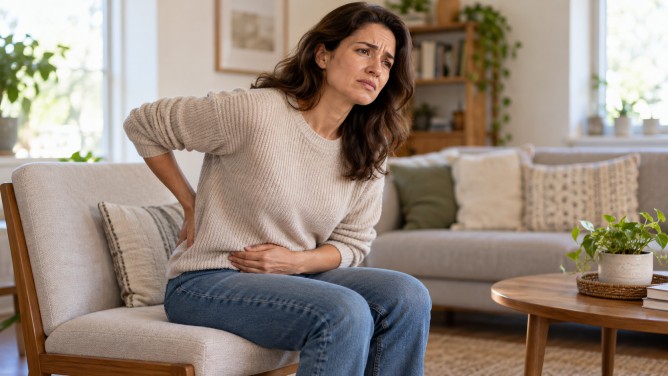
Constipation is commonly linked to hard stools, bloating, and difficulty with bowel movements, but it can also be associated with discomfort in the lower back. While constipation and lower back pain can occur simultaneously, one does not necessarily cause the other. Understanding this potential connection can help determine when digestive issues might be at play and when to seek medical attention.
Constipation can contribute to lower back discomfort through various mechanisms. Accumulated stool in the large intestine can stretch the bowel, creating pressure that may radiate to the lower back or pelvic area. Additionally, repeated straining during bowel movements can exacerbate existing lower back pain, particularly if the abdominal and pelvic muscles are already under strain or if there is a pre-existing back condition. Poor posture while sitting on the toilet, such as slouching or leaning forward, can also strain the lower back.
Issues with the pelvic floor muscles, which aid in bowel control and support the pelvis, can further complicate matters. If these muscles fail to relax properly, it can make passing stool difficult and contribute to pelvic or lower back pain. However, experiencing both constipation and back pain does not automatically mean one is the cause of the other. These symptoms might arise from underlying conditions such as thyroid problems, diabetes, certain neurological disorders, or spinal issues. Pregnancy is another factor that can affect bowel movements and lead to back discomfort.
It’s crucial to be vigilant about certain warning signs that should not be ignored. Seek immediate medical care if constipation and back pain are accompanied by symptoms such as numbness around the buttocks, groin, or inner thighs, difficulty passing urine, new weakness or numbness in both legs, or sudden changes in bowel or bladder control. These could indicate cauda equina syndrome, a serious condition requiring urgent attention to prevent permanent nerve damage. Severe abdominal pain, vomiting, and significant abdominal swelling also warrant urgent medical assessment.
For those experiencing mild constipation, some lifestyle changes may offer relief. Staying hydrated, gradually increasing dietary fiber, maintaining physical activity, responding promptly to the urge to use the toilet, and avoiding excessive straining or prolonged sitting on the toilet can be beneficial. If constipation persists or is accompanied by severe pain, consulting a healthcare professional is advised. Before using laxatives, especially in the presence of severe symptoms, medical advice should be sought.
In summary, while constipation can sometimes be linked to lower back discomfort through factors like bowel pressure and muscle tension, these symptoms may also have separate causes. Persistent pain or symptoms that include new bladder issues, saddle-area numbness, or leg weakness require prompt medical evaluation.