
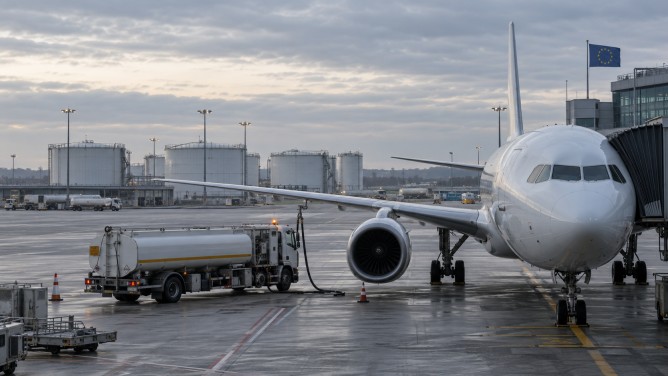
Europe is bracing for a potential jet fuel shortage in the coming months as stock levels in key locations, including Amsterdam, Rotterdam, and Antwerp, have plummeted to their lowest in seven years as of mid-September. Despite a boost in imports from Asia and other regions, analysts predict a deficit of approximately 510,000 barrels per day in the final quarter of this year.
The Swedish Energy Agency has indicated that while supplies of gasoline and diesel remain stable, jet fuel might experience short-term constraints across Europe, including in Sweden. This situation arises even as Europe has increased its import volumes, with Asian jet fuel imports reaching around 129,000 barrels per day in September. Additional supplies from Canada, Nigeria, and the United States have somewhat mitigated the immediate risk of shortages.
Global energy market disruptions stemming from the Middle East conflict are exacerbating supply pressures. Recent attacks impacting energy infrastructure in Saudi Arabia have contributed to rising oil and gas prices in Europe, further complicating the jet fuel supply landscape.
The ongoing geopolitical tensions and their impact on energy markets highlight the vulnerability of Europe’s fuel supply chain. As the continent heads into winter, the combination of low stock levels and external pressures could challenge the region’s ability to maintain a steady supply of jet fuel.