
A stark warning of imminent stagflation is prompting the Bank of England to prepare a defensive interest rate cut this Thursday. A quarter-point reduction to 4% is widely predicted, marking the fifth cut since last August, as the UK economy grapples with rising unemployment and the economic drag from new US tariffs. The MPC’s forthcoming forecasts on Thursday could prove to be even gloomier, indicating a period of sluggish growth coupled with persistent high inflation.
The Chancellor, Rachel Reeves, is expected to welcome the lower borrowing costs for homeowners and businesses that such a cut would bring. However, the government faces a formidable challenge in stimulating growth while simultaneously managing public spending. The UK economy has already contracted in May and April, a slowdown attributed in part to the uncertainty caused by Donald Trump’s trade policies and the impact of recently implemented business taxes.
Evidence of a weakening labor market is also mounting, with job vacancies falling below pre-pandemic levels and the unemployment rate reaching a four-year high of 4.7% in the three months to May. These trends underscore the urgent need for measures to prevent a deeper economic slump.
Despite a specific trade agreement with the UK, President Trump’s broader imposition of additional tariffs of up to 50% on other trading partners is casting a shadow over global growth, with inevitable repercussions for the UK. The International Monetary Fund’s cautious outlook for the UK economy, projecting only marginal expansion for the latter half of the year, further reinforces the difficult environment, making the Bank’s defensive rate cut a crucial intervention.
Stagflation Warning: Bank of England Prepares Defensive Rate Cut
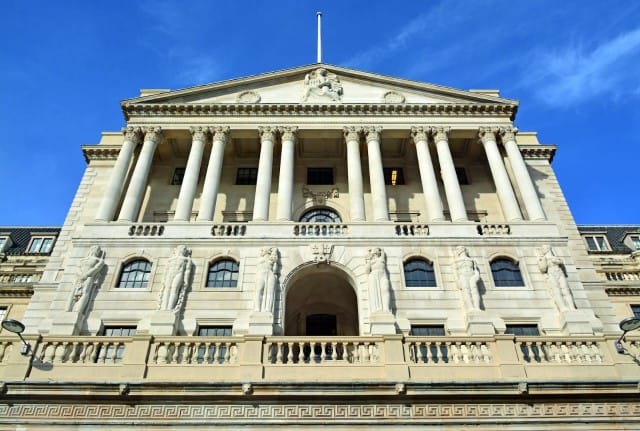
Picture Credit: www.commons.wikimedia.org
53