
The government’s “firm commitment to a just transition” for steelworkers, a phrase welcomed by the Community union, is now the central question facing Scunthorpe. As Business Secretary Peter Kyle backs a move to cleaner electric arc furnaces (EAFs), the definition of “just” is about to be tested.
For the government, the transition is a necessary step to secure the plant’s future and meet net-zero carbon targets. The state-controlled British Steel plant, rescued from potential closure in April, cannot survive long-term with its carbon-heavy blast furnaces. In this view, a “just transition” means moving to a sustainable, green technology.
For the workforce, “just” means jobs. The experience at Tata Steel in Port Talbot, where 2,500 jobs were cut during a similar EAF switch, has made the union “cautious.” They fear “just transition” is a euphemism for mass redundancy packages and retraining for jobs that may not exist.
The union is adding its own condition: a “just transition” must also “maintain primary steelmaking capacity.” This is a direct challenge to the government’s EAF plan, as these furnaces melt scrap, not iron ore. It implies that justice for the industry means preserving its strategic capability, not just its name.
The government is now caught. It must deliver a December steel strategy that funds this transition, likely with a depleted £2.5bn pot, while also managing a deal with the plant’s legal Chinese owner, Jingye. How it balances the environmental, financial, and human costs will determine what “just” really means.
What is a “Just Transition”? Steelworkers Demand Answers on EAF Plan
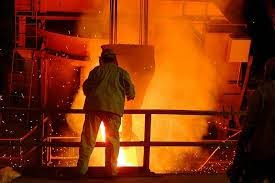
Picture credit: www.rawpixel.com
29